
Is USPS Informed Delivery Service Worth Using in 2026?
Is USPS Informed Delivery service worth it in 2026? Learn benefits, limits, ROI tips, and when marketers should add it to direct mail.
If you already invest in direct mail, the short answer is yes: the USPS Informed Delivery service is usually worth using in 2026. It gives your physical mail a digital preview, a clickable call to action, and another measurable touchpoint before the piece even reaches the mailbox.
The longer answer is more nuanced. Informed Delivery is not a substitute for strong data, a compelling offer, or well-produced mail. It is an amplifier. When marketers treat it as part of an integrated direct mail strategy, it can improve visibility, response opportunities, and campaign reporting. When they treat it as a checkbox, the impact is usually modest.
For printers, agencies, and brands, the real question is not whether Informed Delivery is interesting. It is whether your workflow, creative, data, and measurement process are ready to make it useful.
What is USPS Informed Delivery?
USPS Informed Delivery is a free USPS service that lets enrolled consumers digitally preview incoming mail and manage some package information. Subscribers can receive a daily email digest and view mail previews through their USPS account.
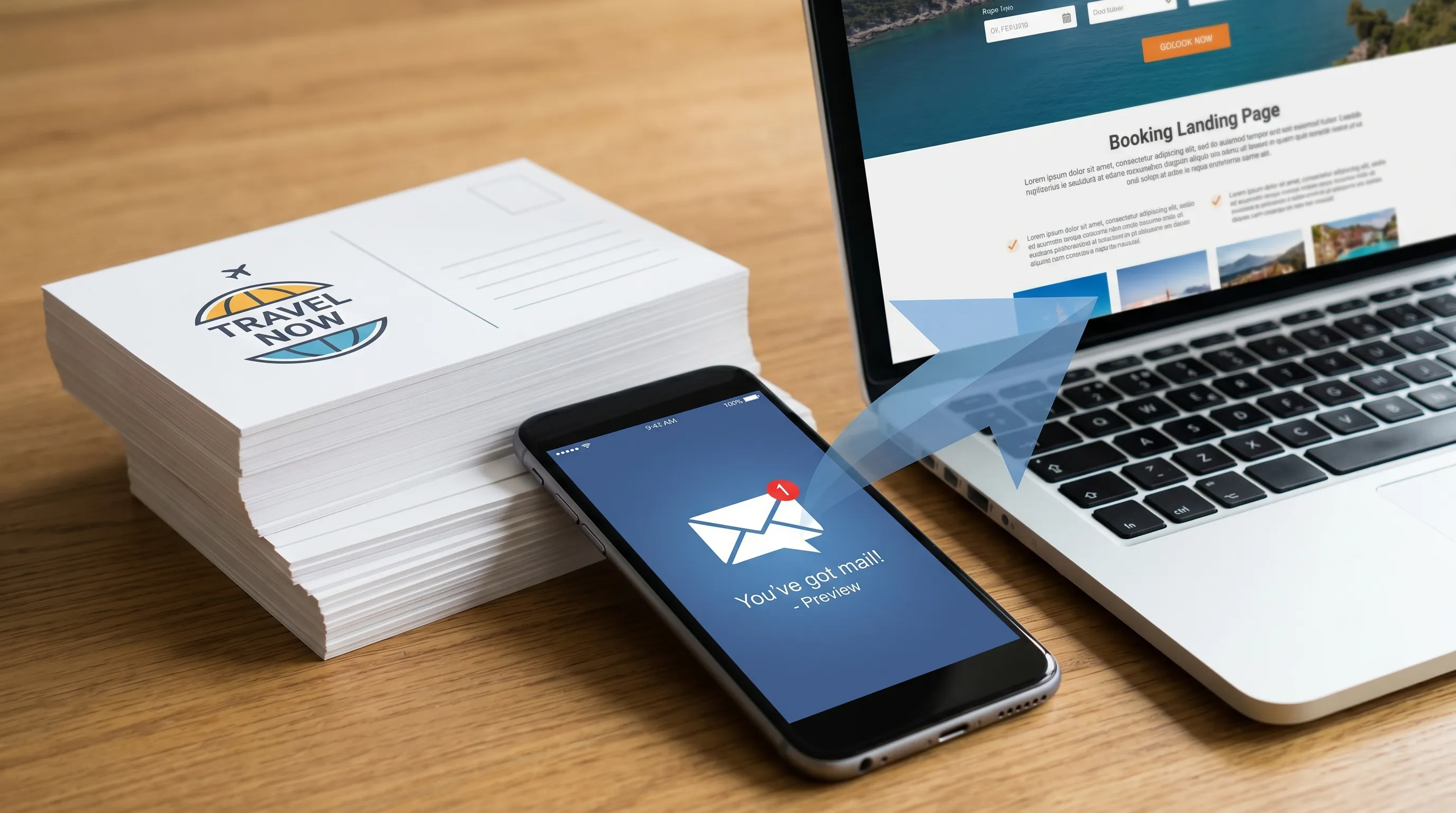
For business mailers, USPS Informed Delivery campaigns allow eligible commercial mailings to include digital campaign elements alongside the mailpiece preview. Instead of relying only on the automatically generated grayscale image of the mailpiece, a marketer can add branded creative and a link that sends recipients to a landing page, offer page, donation page, booking form, or other online destination.
A typical business campaign may include:
- A representative image that reinforces the mailpiece or brand.
- A ride-along image that functions like a digital call-to-action banner.
- A target URL that directs recipients to a specific digital experience.
- Campaign timing that aligns with expected in-home delivery windows.
The result is a hybrid experience. The recipient sees the mail in a digital channel, then receives the physical piece shortly after. For marketers, that creates a second chance to earn attention without replacing the tactile value of mail.
Why the USPS Informed Delivery service matters more in 2026
Direct mail is no longer judged only by how many pieces were printed and mailed. Clients and internal stakeholders increasingly expect connected campaigns, cleaner attribution, and faster visibility into performance. Informed Delivery fits that shift because it helps bridge offline and online marketing.
In 2026, three trends make the service especially relevant.
First, digital channels are crowded. Email inboxes, paid social feeds, and search ads compete for attention all day. A mail preview delivered through a USPS-controlled environment can create a different kind of digital impression, especially because it is tied to something tangible arriving at home.
Second, attribution expectations are higher. Marketers want to know whether a mail campaign drove web visits, form fills, purchases, calls, or appointments. Informed Delivery does not solve attribution by itself, but it gives marketers another trackable path from mail exposure to digital action.
Third, omni-channel execution has become the standard. A standalone postcard can still work, but a postcard connected to landing pages, email, SMS, retargeting, call tracking, and postal scan-triggered automation is easier to optimize. Informed Delivery is one practical layer in that connected journey.
Who benefits from Informed Delivery?
The value of Informed Delivery depends on your role in the direct mail ecosystem. For consumers, it is mostly about convenience. For business mailers, it is about reach, timing, engagement, and measurement.
| Audience | Main value | What to watch |
|---|---|---|
| Consumers | Preview incoming mail and monitor packages through USPS | Only enrolled users receive previews |
| Brands | Add a digital touchpoint to physical mail campaigns | The offer and landing page still need to convert |
| Agencies | Package direct mail as part of an omni-channel campaign | Reporting must separate assumptions from proven outcomes |
| Printers | Offer a higher-value direct mail service to clients | Setup, specifications, and data accuracy matter |
| Nonprofits | Reinforce donor appeals before mail arrives | Donation pages and tracking links should be ready |
For printers and agencies, the service can also help reposition direct mail from a production output to a measurable marketing channel. That matters when clients are comparing print spend against digital media budgets.
The biggest advantages for marketers
The strongest case for Informed Delivery is not that it creates a flashy digital add-on. It is that it adds a measurable, clickable impression to a campaign you are already paying to produce and mail.
It creates an early digital impression
Informed Delivery can put your brand and offer in front of recipients before the mailpiece is physically handled. That early impression can build recognition, increase curiosity, and make the physical piece feel more familiar when it arrives.
For example, a healthcare provider sending appointment reminders could use the digital element to direct patients to scheduling information. A retailer could preview a seasonal promotion. A nonprofit could reinforce the urgency of a fundraising appeal. The mailpiece still does the heavy lifting, but the digital preview helps prepare the recipient.
It gives direct mail a clickable CTA
One limitation of physical mail is that the recipient must take an extra step to respond. They may type a URL, scan a QR code, call a number, or visit a store. Informed Delivery adds a click path directly from the USPS email or dashboard.
That matters because even a small reduction in friction can improve response. The recipient can move from awareness to action immediately, especially on mobile.
It supports better timing across channels
Direct mail timing has always been important. Informed Delivery gives marketers another way to align digital activity with expected mail arrival. When combined with postal tracking, email, SMS, or ad audiences, it becomes easier to coordinate messaging around the days when mail is most likely to be seen.
This is especially useful for time-sensitive campaigns, such as event registrations, appointment windows, political outreach, limited-time offers, insurance renewals, and enrollment periods.
It helps agencies and printers sell more strategic mail programs
For service providers, Informed Delivery can be part of a more consultative offering. Instead of simply asking clients for artwork and a list, agencies and printers can discuss audience segmentation, landing pages, digital creative, response tracking, and post-campaign reporting.
That shift can increase perceived value. It can also make direct mail easier to defend in budget conversations because the campaign is tied to measurable digital actions.
The limitations you need to understand
Informed Delivery is useful, but it is not magic. Marketers should understand the constraints before promising results.
Not every household is enrolled
Only consumers who sign up for Informed Delivery can see the digital preview. That means your campaign will not reach every mailed household through the digital layer. The physical mailpiece still needs to work on its own.
This is one reason Informed Delivery should be treated as an enhancement, not the primary campaign channel.
Digital visibility does not guarantee response
A preview impression is still just an impression. The recipient may ignore the email, skim past the image, or decide the offer is not relevant. Creative and audience fit remain essential.
If the mailing list is weak, the offer is vague, or the landing page is slow, Informed Delivery will not fix the campaign.
Setup requires operational discipline
Successful campaigns depend on accurate data, proper use of Intelligent Mail barcodes, USPS eligibility requirements, campaign assets, and timing. Printers and agencies need a repeatable process so campaign setup does not become a last-minute scramble.
USPS requirements can change, so mailers should verify current specifications through USPS or PostalPro before launch.
Attribution still needs planning
Informed Delivery can help track clicks, but clicks are only one signal. Some recipients may see the preview, wait for the mail, and respond later through a QR code, phone call, search query, or store visit. Others may click but convert through another channel.
To measure value accurately, marketers need campaign-specific tracking, matchback analysis, or test designs that compare exposed and non-exposed groups where possible.
Is it worth it for consumers?
For consumers, USPS Informed Delivery is generally worth using if they want more visibility into incoming mail and packages. The service is free, easy to access, and useful for people who travel, manage household bills, monitor important documents, or simply want to know what is arriving.
There are some practical limitations. Mail previews may not show every item, delivery timing can vary, and the service does not replace secure mailbox habits. Still, for most households, the convenience outweighs the downside.
For marketers, consumer adoption is the reason the service matters. Every enrolled recipient represents a chance to add a digital interaction to a physical mail campaign.
Is it worth it for brands, agencies, and printers?
For most commercial mailers, yes, especially when Informed Delivery is integrated into the campaign strategy from the beginning.
It is most worth using when:
- You are already sending direct mail at meaningful volume.
- Your audience is likely to respond online.
- You have a clear offer and a dedicated landing page.
- You can measure clicks, conversions, calls, or matchback results.
- Your production workflow can handle campaign setup reliably.
- You want to position direct mail as part of an omni-channel program.
It may be less worth prioritizing when the campaign is very small, the audience is unlikely to engage digitally, the offer has no online response path, or the team cannot support the setup and tracking requirements.
| Campaign situation | Is Informed Delivery worth using? | Why |
|---|---|---|
| Retail promotion with online redemption | Yes | Adds a direct click path to the offer |
| Appointment reminder or renewal notice | Yes | Reinforces timing and reduces response friction |
| Donor appeal with donation landing page | Yes | Supports immediate online giving |
| Brand awareness mailer with no CTA | Maybe | Can add exposure, but measurement may be weak |
| One-time small mailing with no tracking | Maybe not | Setup effort may outweigh insight |
| Poor-quality list or unclear offer | No, fix fundamentals first | The digital layer cannot rescue weak strategy |
How to measure ROI from Informed Delivery
To decide whether the USPS Informed Delivery service is worth it for your organization, define success before the campaign goes live. Do not rely only on impressions or clicks unless awareness is the only goal.
Useful metrics include:
- Informed Delivery email impressions or opens, if available through your reporting workflow.
- Clicks from the ride-along image or target URL.
- Landing page conversion rate from Informed Delivery traffic.
- QR code scans or personalized URL visits from the physical mailpiece.
- Phone calls using campaign-specific tracking numbers.
- Matchback conversions tied to mailed households.
- Incremental lift versus a holdout group or previous campaign.
A simple ROI view is:
Incremental profit from additional conversions minus creative, setup, data, and operational costs.
That sounds basic, but it keeps the analysis grounded. If Informed Delivery adds clicks but no qualified conversions, the creative or landing page may need improvement. If it adds conversions at a low marginal cost, it deserves a larger role in future campaigns.
Best practices for using Informed Delivery in 2026
The best Informed Delivery campaigns feel like a natural extension of the mailpiece. The digital creative should not look disconnected from what arrives in the mailbox.
Use these best practices to improve results:
- Start with the offer: A strong offer beats clever formatting. Make the value clear in both the mailpiece and digital creative.
- Create a dedicated landing page: Send clicks to a page that matches the campaign message, not a generic homepage.
- Keep the ride-along image simple: Use clear branding, a short CTA, and a visual that is legible on mobile.
- Align timing with mail delivery: Coordinate digital follow-ups around expected in-home dates and postal scan signals.
- Use clean, enriched data: Better data improves targeting, personalization, deliverability, and measurement.
- Test creative and audience segments: Compare offers, audience groups, and landing pages to learn what actually drives response.
- Plan compliance early: Regulated industries should review privacy, claims, disclaimers, and data usage before campaign buildout.
- Document results for the next campaign: Treat every mailing as a learning cycle, not a one-off execution.
USPS also periodically offers direct mail promotions and incentives. Availability and rules vary by year, so check the current USPS promotions information when planning budgets.
Where DirectMail.io fits into the workflow
Informed Delivery works best when it is part of a connected direct mail operation, not an isolated task. That is where a platform approach becomes valuable.
DirectMail.io is built for printers, agencies, and brands that need to manage direct mail and omni-channel marketing campaigns from a single login. For teams planning Informed Delivery alongside broader mail programs, the surrounding workflow matters: data hygiene, design, variable data, print-ready output, automation, reporting, integrations, and client management all affect campaign quality.
With DirectMail.io, teams can support modern direct mail operations through capabilities such as direct mail automation, omni-channel campaign management, white-label branding, print-ready PDF output, data hygiene and enrichment, variable data and imaging, real-time reporting dashboards, USPS scan-triggered automation, API and SFTP integrations, sub-accounts, and client storefronts.
That broader infrastructure helps marketers do the hard part: turn a mailpiece into a coordinated campaign that can be launched, tracked, optimized, and repeated.
Final verdict: is USPS Informed Delivery worth using in 2026?
Yes, the USPS Informed Delivery service is worth using in 2026 for most serious direct mail marketers, especially those already investing in campaign strategy, data quality, landing pages, and reporting.
It is not a standalone growth engine. It will not make a weak offer compelling or a bad list profitable. But as a low-friction digital layer on top of physical mail, it can increase visibility, create clickable response paths, and make direct mail easier to connect with online outcomes.
For consumers, it is a useful free convenience. For brands, agencies, and printers, it is a practical way to modernize direct mail and make campaigns more measurable.
The best approach is to test it, track it, and treat it as one part of an omni-channel direct mail system.
Frequently Asked Questions
Is USPS Informed Delivery free? The consumer service is free. Business mailers typically still pay normal production and postage costs, and they should confirm current USPS campaign requirements and any applicable fees or promotions before mailing.
Does Informed Delivery reach every person on my mailing list? No. Only enrolled consumers can see Informed Delivery previews. Your physical mailpiece still needs to be strong enough to perform without the digital preview.
Can Informed Delivery replace QR codes or personalized URLs? No. It works best alongside QR codes, personalized URLs, call tracking, and campaign landing pages. Each response path captures different behavior.
What types of campaigns benefit most from Informed Delivery? Campaigns with a clear online action usually benefit most. Examples include retail offers, appointment scheduling, renewals, fundraising, event registration, lead generation, and customer reactivation.
How should marketers track Informed Delivery performance? Use campaign-specific URLs, analytics parameters, conversion tracking, call tracking, QR codes, and matchback reporting. For stronger proof, compare results against a holdout group or prior campaigns.
Should printers and agencies offer Informed Delivery to clients? Yes, when they have a reliable workflow for data, creative, USPS requirements, and reporting. It can help position direct mail as a measurable omni-channel service rather than a print-only product.
Build direct mail campaigns that are ready for 2026
If your team wants to make direct mail more automated, measurable, and connected, Informed Delivery can be a smart layer in the strategy. The bigger opportunity is building a workflow that brings data, design, postal execution, omni-channel automation, and reporting together.
DirectMail.io gives printers, agencies, and brands the tools to manage modern direct mail campaigns from one login, including automation, data hygiene, variable creative, print-ready output, reporting, integrations, and client-ready workflows.