
What Informed Delivery Mail Can Do for Response Rates
Learn how Informed Delivery mail can lift response rates with digital previews, ride-along links, better timing, and cleaner attribution.
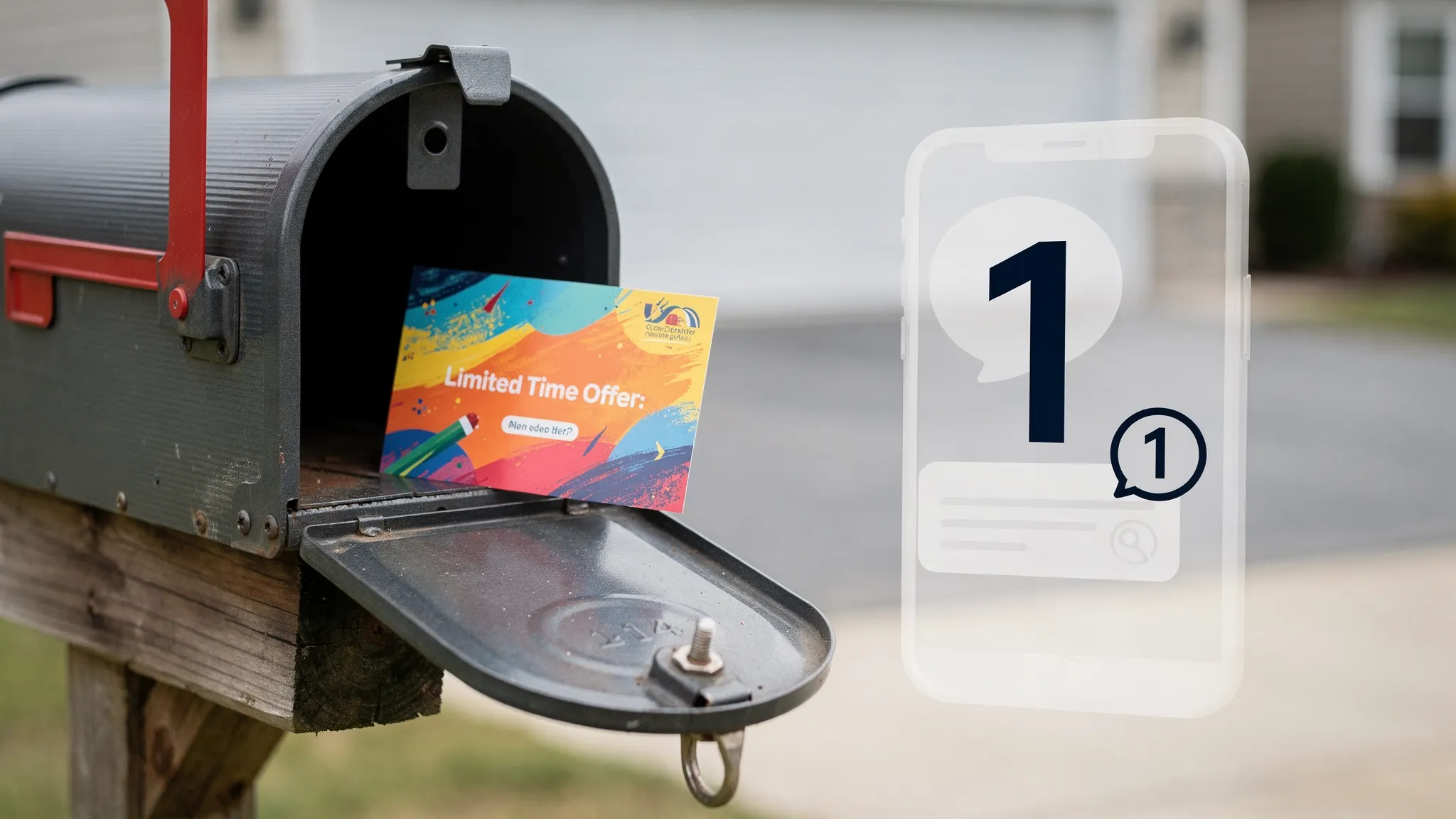
Most direct mail campaigns rely on a single moment of attention: the recipient pulls the piece from the mailbox, decides whether it matters, and either acts or moves on. Informed Delivery mail changes that sequence. It gives eligible USPS users a digital preview of incoming mail and, when the mailer runs an interactive campaign, a clickable path to respond before or around the time the physical piece arrives.
That matters because response rates are rarely driven by one variable. They come from a stack of small advantages: better timing, clearer offers, stronger recall, lower friction, and more measurable follow-up. Informed Delivery does not turn a weak campaign into a great one by itself, but it can make a good direct mail campaign work harder.
What Informed Delivery mail actually adds
USPS Informed Delivery is a free consumer-facing USPS feature that lets enrolled users preview incoming mail digitally. For marketers, the business value is the ability to add campaign assets to that preview experience, including a full-color representative image and a ride-along image with a clickable call to action.
Without an interactive campaign, a user may simply see a grayscale image of an incoming mailpiece. With an interactive campaign, the mailer can reinforce the brand, show the offer more clearly, and send the recipient to a landing page, booking flow, coupon, donation page, or other response destination.
| Informed Delivery element | What it changes | Response-rate implication |
|---|---|---|
| Digital mail preview | The recipient sees the mailpiece in email or a digital dashboard | Adds an extra impression close to delivery |
| Representative image | The mailer controls a cleaner visual than the default scan | Improves recognition and offer clarity |
| Ride-along image | The campaign includes a clickable creative asset | Reduces friction for digital response |
| Destination URL | The recipient can act before holding the piece | Captures high-intent clicks earlier |
| Campaign reporting | The mailer sees digital engagement signals | Helps diagnose creative and timing performance |
The key is that Informed Delivery mail creates a bridge between the physical and digital response paths. A recipient can click immediately, keep the email for later, or recognize the mailpiece more quickly when it arrives in the mailbox.
Why it can lift response rates
It creates a second impression without buying another channel
The simplest response-rate advantage is frequency. A standard mail campaign creates one primary impression: the mailpiece itself. Informed Delivery adds a digital impression to the same campaign without requiring you to buy another list, launch a separate ad campaign, or wait for a second drop.
That impression arrives at a valuable moment. Recipients are checking what is about to arrive, not passively scrolling through a feed. The context is mail-focused, which means your campaign is not competing in the same way it would inside a crowded social or display environment.
For agencies and brands, this can be especially useful when the offer requires trust. A financial consultation, healthcare appointment, home services estimate, automotive service offer, or nonprofit appeal often benefits from repeated recognition before action. Seeing the offer digitally first can make the physical piece feel more familiar when it lands.
It turns a physical campaign into a clickable experience
Direct mail has always had a response friction problem. Even when a recipient is interested, they may need to type a URL, scan a QR code, call a number, or remember to act later. Each step creates drop-off.
Informed Delivery reduces that friction by putting a clickable CTA directly in the daily mail preview. That is not a replacement for QR codes, PURLs, phone numbers, or reply devices. It is another path, and for some recipients, it is the fastest one.
This is where campaign intent matters. A generic brand-awareness mailer may not see much direct click activity because the recipient has no urgent reason to act. A strong offer with a clear next step, such as schedule your appointment, claim your estimate, activate your coupon, renew your membership, or view your personalized quote, gives the digital CTA a real job.
It improves recall when the physical piece arrives
A direct mail response often happens in stages. The recipient notices the brand, registers the offer, sets the piece aside, discusses it with someone else, then acts later. Informed Delivery can support that process by creating recognition before the mailbox moment.
This is especially helpful when the mailpiece uses strong visual consistency. The digital image, physical piece, landing page, and follow-up messaging should all feel like one campaign. When the recipient sees the same offer and creative language across touchpoints, the campaign becomes easier to understand and harder to ignore.
It gives marketers earlier signals than mail response alone
Traditional direct mail measurement can lag. You may not know how a drop is performing until calls, QR scans, coupon redemptions, form fills, or purchases start to accumulate. Informed Delivery engagement gives you earlier directional signals, especially clicks.
Those signals are not the same as revenue attribution, but they are useful. If one creative version earns more clicks than another, if one offer drives stronger digital engagement, or if a campaign produces previews but no downstream conversions, the team can diagnose the funnel faster.
The most useful programs connect Informed Delivery reporting to broader attribution, including PURLs, QR codes, call tracking, CRM events, and order data. If you need a deeper measurement framework, DirectMail.io’s guide to direct mail tracking and attribution tools explains how per-piece tracking, response tracking, and revenue attribution fit together.
Where Informed Delivery mail tends to help most
Informed Delivery is not equally valuable for every campaign. It tends to matter most when the campaign has a clear action, a strong offer, and enough margin or lifetime value to justify careful optimization.
Local service campaigns can benefit because recipients often want a fast way to schedule, request a quote, or view service availability. Automotive campaigns can use the digital touchpoint to drive appointment setting, trade-in valuations, or service offers. Real estate campaigns can send recipients to home valuation pages, market snapshots, or agent landing pages. Nonprofits can make the donation path easier. Healthcare and dental campaigns can use it to support appointment requests, subject to applicable privacy and advertising rules.
For printers and agencies, it is also a strong value-add because it makes direct mail feel more measurable and integrated. Instead of selling print alone, you can package mail, digital preview assets, landing pages, and reporting as one campaign system.
| Campaign type | Why Informed Delivery can help | Best response action |
|---|---|---|
| Appointment-driven offers | Recipients can act immediately from the preview | Book a visit or consultation |
| Coupon and retail offers | The digital CTA reinforces the physical coupon | Claim or save the offer |
| High-consideration purchases | Extra impression builds familiarity | View details, estimate, or quote |
| Nonprofit appeals | The donation path becomes easier | Donate or learn more |
| Reactivation campaigns | The email preview can restart attention before the piece arrives | Return, renew, or redeem |
| Event invitations | Timing and urgency are clearer | RSVP or register |
The common thread is that the recipient knows what to do next. If the campaign cannot answer that question in one glance, Informed Delivery will expose the weakness rather than fix it.
How to think about response-rate lift
The cleanest way to evaluate Informed Delivery mail is with an incremental test. Do not just count clicks and declare success. Clicks are a leading indicator, but the real question is whether the interactive campaign created more qualified responses, conversions, or revenue than mail alone.
A practical test compares a mail-only control group with a mail plus Informed Delivery test group. The audiences should be similar, the offer should be the same, and the response window should be consistent. Then measure total response, not just digital response.
| Metric | Mail-only control | Mail plus Informed Delivery | Notes |
|---|---|---|---|
| Mailed records | 25,000 | 25,000 | Randomized audience cells |
| Response rate | 3.0% | 3.4% | Example only, not a benchmark |
| Total responses | 750 | 850 | 100 incremental responses |
| Gross profit per response | $120 | $120 | Use your actual unit economics |
| Incremental gross profit | Baseline | $12,000 | 100 x $120 |
The formula is simple:
Incremental response rate = test response rate - control response rate
Incremental profit = incremental responses x gross profit per response - incremental campaign cost
This matters because Informed Delivery engagement can be uneven. Only enrolled users receive the preview experience, and not every enrolled user opens or clicks every message. A campaign can still be successful if the total mailed audience produces more conversions, even if only a portion of households interacted digitally.
What Informed Delivery cannot fix
Informed Delivery is a multiplier, not a rescue tool. If the list is poor, the offer is unclear, or the landing page is disconnected from the mailpiece, the digital preview will not overcome those problems.
The biggest failure modes are usually upstream of Informed Delivery. Bad address data wastes postage and reduces deliverability. Weak segmentation sends the right creative to the wrong audience. A vague CTA gives recipients no reason to click. A slow or generic landing page breaks the promise made in the mailpiece.
Before you judge Informed Delivery performance, make sure the fundamentals are in place:
- The audience is clean, current, and properly suppressed.
- The offer is specific enough to understand in seconds.
- The physical mailpiece and digital assets use consistent branding.
- The CTA points to a campaign-specific landing page.
- The response event is trackable in your CRM, e-commerce platform, or call system.
- The reporting window matches the buying cycle.
- The test includes a realistic control or baseline.
If list quality is a concern, start with the basics: NCOA, CASS, DPV, de-duplication, and suppression management. DirectMail.io’s list hygiene checklist covers the address-quality steps that should happen before any serious response-rate test.
Creative rules that make Informed Delivery work harder
The Informed Delivery creative should not be treated as a banner ad loosely attached to a mail drop. It should function as a compressed version of the campaign promise.
A strong ride-along image usually does three things: it repeats the offer, makes the action obvious, and visually connects to the physical mailpiece. If the postcard says free consultation, the ride-along should not say learn more unless that softer CTA is intentional. If the mailpiece uses a deadline, the digital CTA should reinforce it. If the landing page has a different headline from the mailpiece, expect confusion.
The best campaigns also respect channel behavior. The recipient may see the digital preview on a phone in the morning and the physical piece later in the day. That means the digital experience should load quickly, require minimal typing, and make the next step easy. Long forms, generic homepages, and disconnected landing pages waste the click.
Segmentation can also help. If your campaign has different offers for prospects, customers, lapsed buyers, or high-value households, the Informed Delivery assets should align with those segments where your workflow supports it. The goal is not to create complexity for its own sake. The goal is to avoid a generic digital preview attached to a highly targeted mailpiece.
How printers, agencies, and brands should use it
For printers, Informed Delivery can help shift the conversation from commodity print production to campaign performance. A printer that can support data hygiene, postal preparation, digital campaign assets, and reporting is selling a more valuable service than ink on paper alone.
For agencies, it becomes part of the client performance story. You can show that direct mail is not isolated from digital channels. It can produce digital engagement, support landing-page tests, and contribute to a multi-touch journey.
For brands, the value is operational. Informed Delivery works best when it is tied to CRM audiences, offer logic, landing pages, and attribution. That requires coordination between marketing, data, creative, and operations.
| Team | Strategic use | KPI to watch |
|---|---|---|
| Printers | Package digital preview assets with print and mail services | Campaign adoption and client retention |
| Agencies | Add Informed Delivery to direct mail retainers and tests | Response lift and cost per lead |
| Brands | Connect mail previews to CRM and revenue events | Incremental conversions and revenue |
| Franchises | Support local offers while keeping brand consistency | Location-level response and redemption |
This is why all-in-one workflows matter. DirectMail.io brings data, design, postal, omni-channel automation, and reporting into one login, with capabilities such as data hygiene and enrichment, variable data and imaging, print-ready PDF output, USPS scan-triggered automation, API and SFTP integrations, white-label branding, sub-accounts, client storefronts, and real-time reporting dashboards.
Build it into an omni-channel response system
Informed Delivery is most powerful when it is not the only coordinated touch. A modern direct mail campaign might include the physical piece, the Informed Delivery preview, a landing page, email or SMS follow-up, paid social retargeting, and CRM attribution.
The timing layer is especially important. USPS scan events can help teams coordinate follow-up around expected delivery. If you are exploring this, read DirectMail.io’s USPS scan-triggered email guide for a deeper look at how mail scans can trigger digital messaging.
For larger teams, this is where AI and workflow automation can matter. If you are trying to connect CRM data, creative versioning, landing pages, and reporting across legacy tools, an AI opportunity audit can help identify the processes that are worth automating before you scale the program.
The point is not to add channels for the sake of complexity. The point is to make the response path easier for the recipient and easier to measure for the marketer.
A practical way to decide if it belongs in your next campaign
Use Informed Delivery when the campaign has enough value to justify optimization and enough clarity to benefit from a digital CTA. It is a strong fit when you can answer yes to three questions.
First, does the recipient have a clear next step? If the answer is no, fix the offer and landing page first. Second, can you track responses beyond clicks? If not, set up PURLs, QR codes, call tracking, CRM campaign IDs, or e-commerce attribution before you launch. Third, is the audience large enough to evaluate? Small campaigns can still benefit, but they may not produce enough data to prove incremental lift.
If you are new to the setup process, DirectMail.io’s guide on how to launch an Informed Delivery campaign covers the practical steps. For response-rate strategy, the bigger lesson is this: Informed Delivery works best when it is planned as part of the campaign architecture, not added at the last minute.
Frequently Asked Questions
What is Informed Delivery mail? Informed Delivery mail refers to direct mail that appears in the USPS Informed Delivery experience for enrolled users. Marketers can run interactive campaigns that add branded images and a clickable CTA to the digital preview.
Does Informed Delivery guarantee higher response rates? No. It can improve response rates by adding a digital impression, reducing response friction, and improving recall, but results depend on the list, offer, creative, landing page, timing, and measurement setup.
How should I measure Informed Delivery performance? Measure total incremental response, not just clicks. Use a control group when possible, connect responses to CRM or revenue data, and compare conversion rates, cost per response, and profit per mailed record.
Is Informed Delivery only useful for large mailers? Large campaigns produce cleaner test data, but smaller campaigns can still benefit when the offer is strong and the response action is simple. Printers and agencies can also package it as a value-added service for clients.
What should the ride-along CTA link to? It should link to a campaign-specific destination, such as a landing page, appointment scheduler, quote page, donation page, coupon page, or personalized URL. Avoid sending traffic to a generic homepage unless brand awareness is the only goal.
Make Informed Delivery part of a measurable mail program
Informed Delivery mail can lift response rates when it is connected to the rest of the campaign: clean data, strong creative, precise timing, easy response paths, and reliable attribution.
DirectMail.io helps printers, agencies, and brands manage direct mail automation, omni-channel campaigns, postal workflows, variable data, reporting, integrations, and client-ready operations from a single platform. If you want to turn direct mail into a more measurable response engine, explore DirectMail.io and see how your next campaign could perform with the full system in place.